





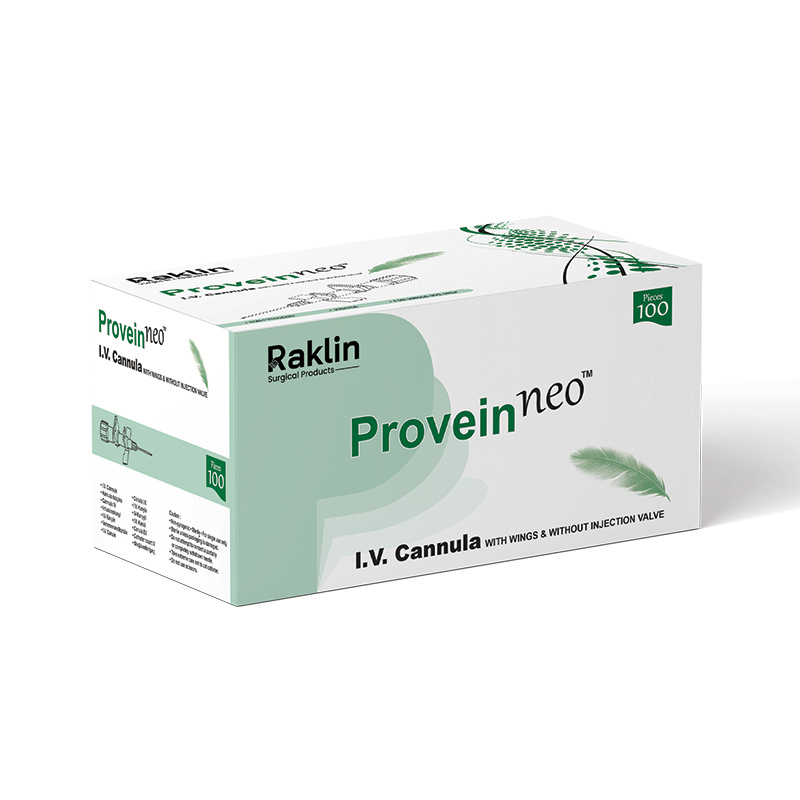
I.V. Cannula With Wings & Without Injection Valve
An I.V. Cannula with Wings and Without an Injection Valve (often termed a portless or one-way cannula) is a streamlined vascular access device. Because it lacks an upper injection port, it eliminates extra openings to substantially lower the risk of contamination and hospital-acquired infections. It relies on a single posterior entrance line, making it the clinical gold standard for neonates, pediatric oncology, and high-risk long-term fluid therapies.
Key Technical Specifications
Portless Architecture: Features a completely enclosed, smooth linear top profile. This prevents accidental mechanical snagging and drastically limits bacterial colonization surfaces.
Slanted Flexible Wings: Angled, grooved stabilization wings sit perfectly flush against the patient’s skin. This design provides simple, secure tape fixation to avoid vein wall scraping or catheter displacement.
Catheter Material: Molded from highly biocompatible, kink-resistant Fluorinated Ethylene Propylene (FEP-Teflon) or Polyurethane (PUR). PUR variants soften inside the blood vessel at core body temperature to prevent mechanical phlebitis.
Tipping Technology: Features an ultra-sharp, Japanese triple-facetted beveled needle. It is paired with an automated double-tapered tip transition zone to prevent "peel-back" when entering tough or fragile skin.
Backflow Identification: Houses a transparent flashback chamber capped with a hydrophobic filter. This setup vents air immediately to give a prompt visual blood flash confirmation upon successful venipuncture.
Primary Clinical Indications
Neonatal & Pediatric Wards: Very small, fine infant veins are fragile. The absence of a bulky top injection port makes the device lighter and easier to secure safely on tiny limbs without causing skin necrosis.
High-Risk Infectious Cases: Crucial in specialized ICU environments or for immunocompromised oncology patients where additional access openings pose an unacceptable infection vector.
Continuous Infusions: Tailored for closed, continuous infusion lines where bolus doses via a valve are not clinically planned.